Bad data in SFCC rarely stays in one place.
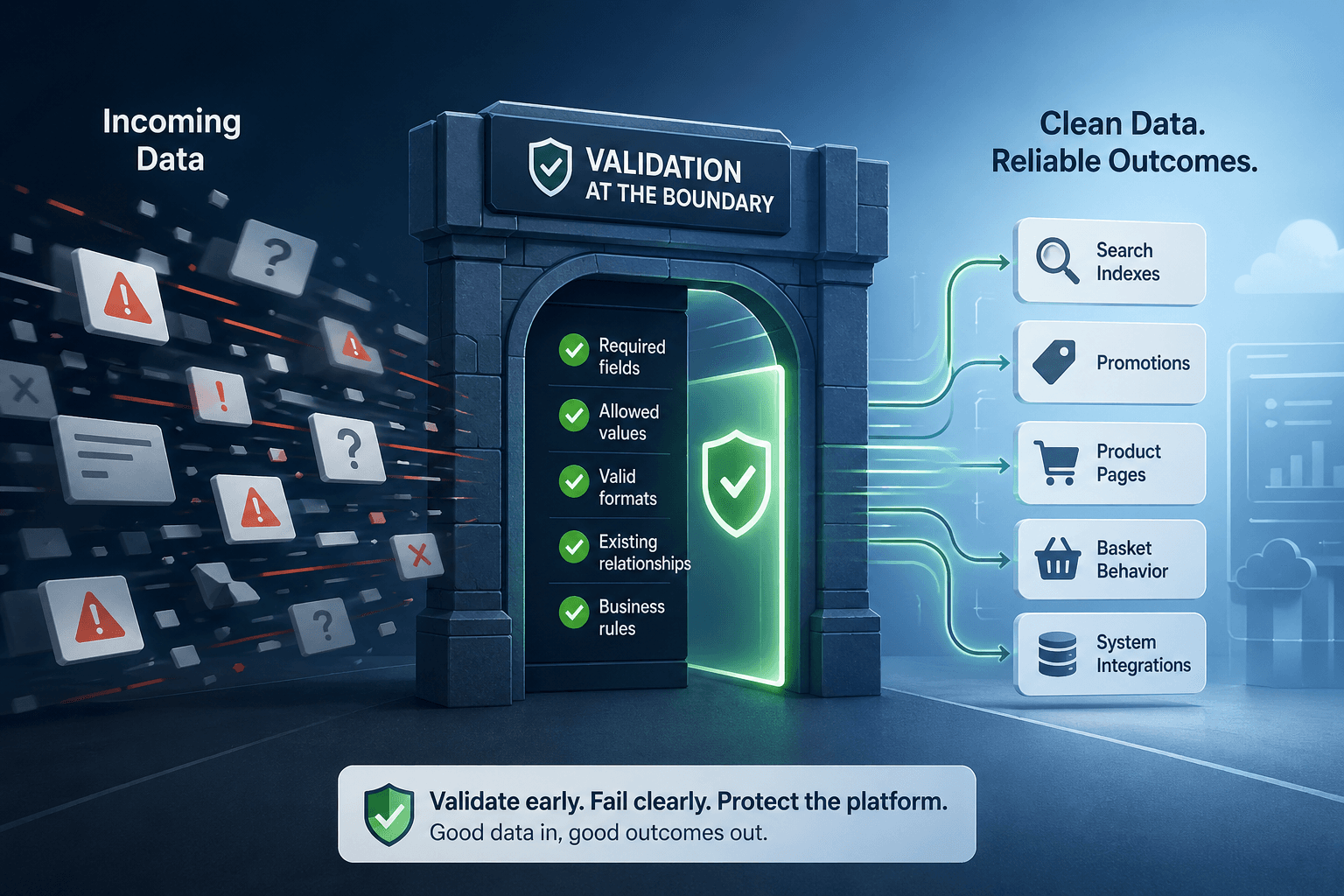
That is why validation should happen at the boundary.
Not only when the storefront throws an error.
Not only when a job fails.
Not only when support reports that something looks strange in Business Manager.
By then, the bad data has usually already travelled.
It may have reached search indexes.
It may have affected promotions.
It may have created broken product detail pages.
It may have produced inconsistent basket behavior.
It may have been exported again to another system.
In B2C Commerce projects, teams often treat validation as a technical detail.
For me, it is an architecture rule.
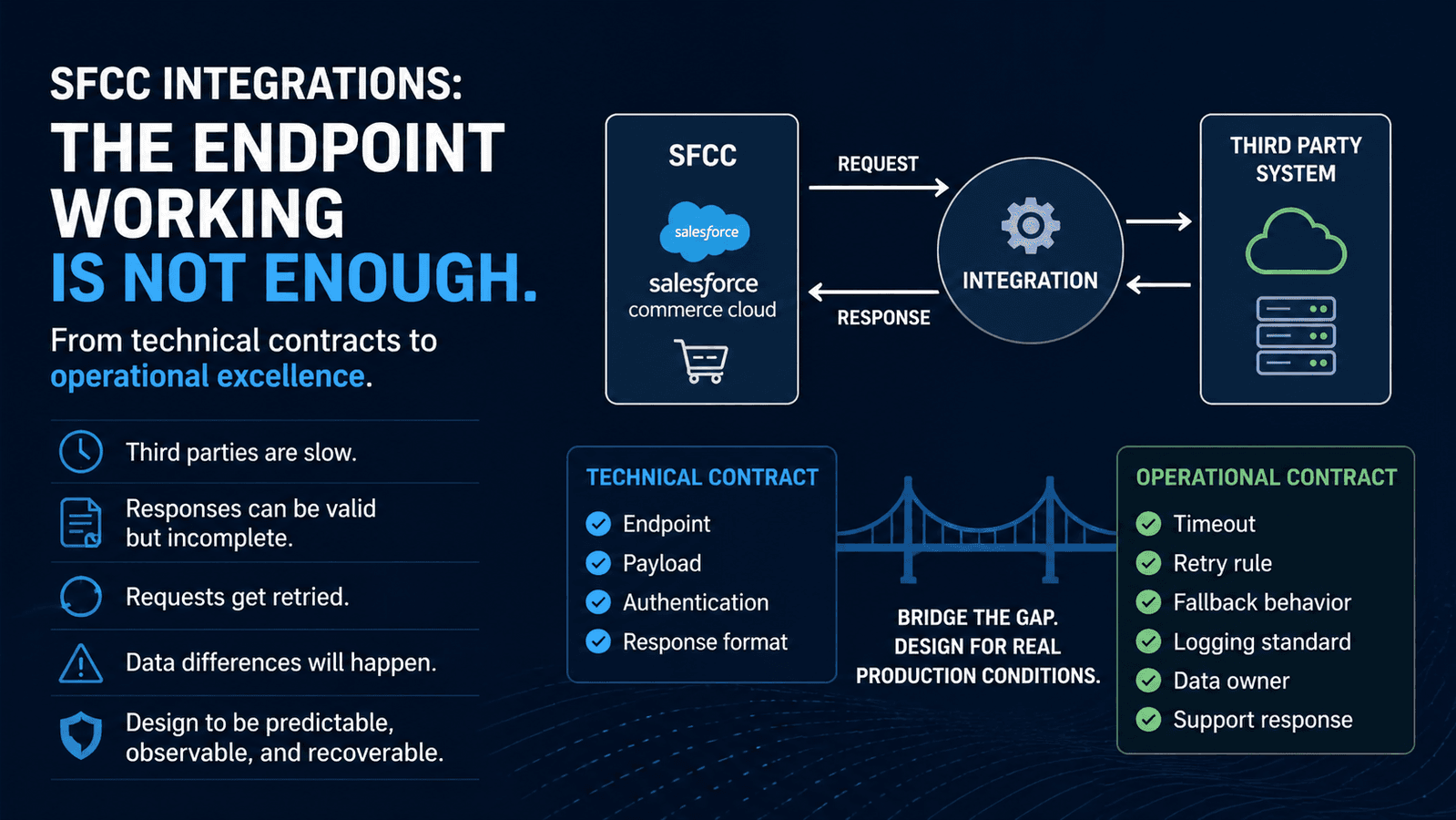
Every data entry point needs a clear contract:
What fields are required?
Which values are allowed?
Which formats are accepted?
Which relationships must exist?
What should be rejected immediately?
What can be accepted with a warning?
Who owns the correction?
This applies to product imports, price books, inventory, customer data, custom objects, forms, OCAPI flows, middleware feeds, and scheduled jobs.
The weak pattern is simple:
"Import it first, fix problems later."
That usually becomes:
"Nobody knows which records are wrong, where they came from, or what else they affected."
A stronger pattern is to validate before writing, log with enough context, fail loudly when the risk is high, and make errors understandable for the team that must correct them.
Good validation is not about being strict for the sake of it.
It is about protecting the system from ambiguity.
Because SFCC is very good at executing what we configure and build.
If we feed it unclear data, it will still execute.
Just not always in the way the business expects.
What data validation rule has saved your team the most time in an SFCC project?
———
Architecture
Bad Data Travels Fast in SFCC. Validate It Before It Spreads
2 minute read